

Kabarole Research and Resource Centre-Uganda (KRC-Uganda) is a well-established NGO operating countrywide in different regions of Uganda. Founded in 1996, with a research mission and a long-term commitment to understanding the measures and drivers of poverty and its solutions, KRC-Uganda has …
Our Programs
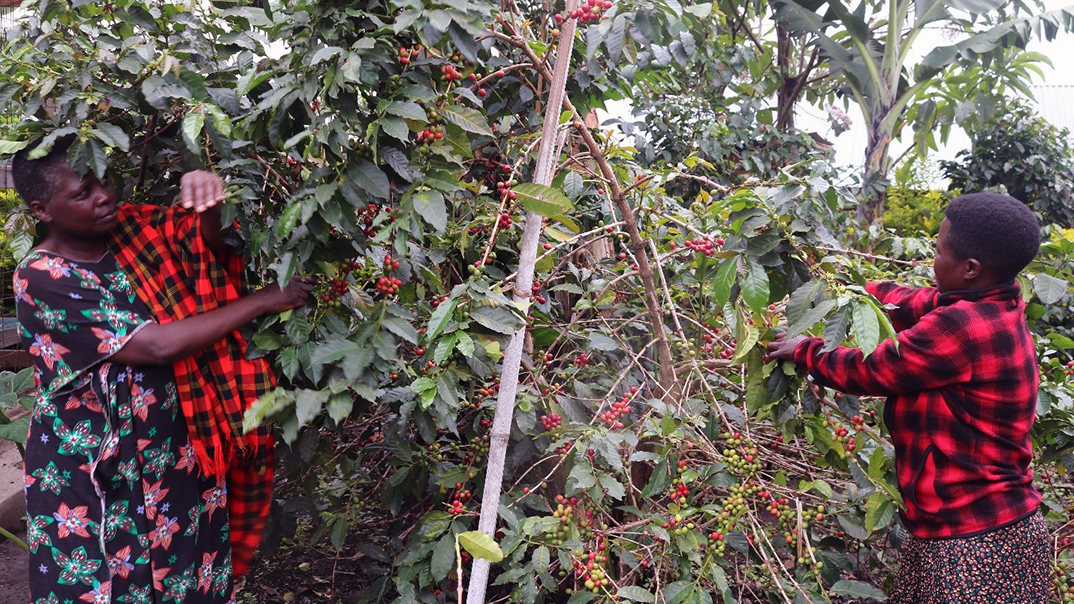
FAGREC Unit
This program plays a vital role in bolstering the efforts of farmers’ organizations by providing comprehensive support across various critical areas of agricultural development.

Information Research & Communications
Since its founding in 1996, KRC has stood by the philosophy that meaningful actionable data is the driver of successful and impactful development programs.
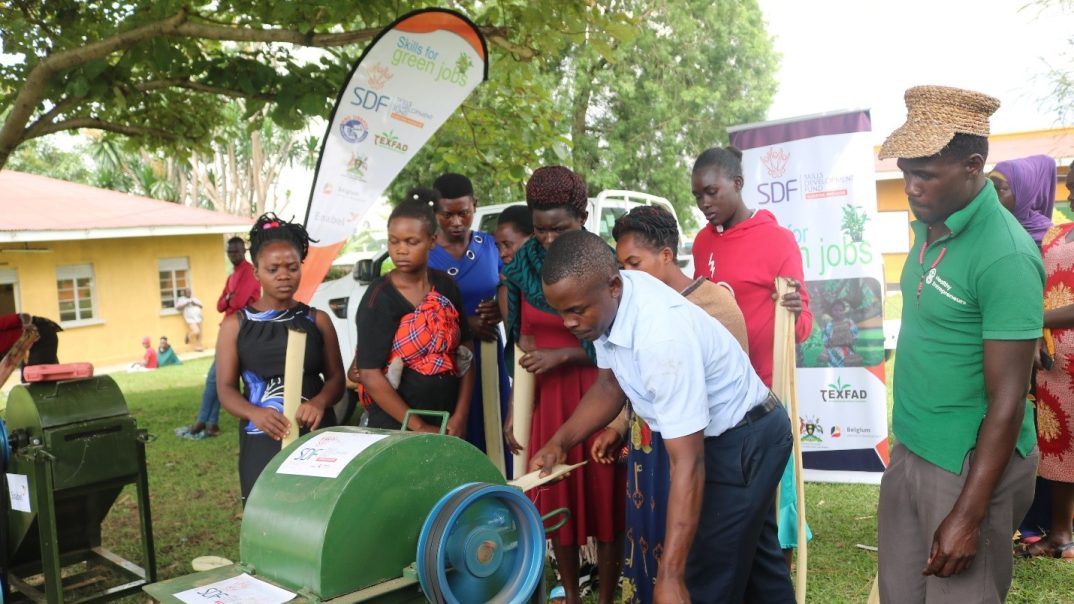
GPH Unit
KRC facilitate spaces for citizens to make their voices heard and exercise their democratic and civic rights. We work with governance structures with the aim of enhancing
Top
Top
30 Years of Impact
KRC Uganda is celebrating 30 years of transformative community work, advancing research, advocacy, and inclusive development across Uganda.
Since 1996, we’ve empowered citizens, influenced policy, and championed social justice in areas like nutrition, livelihoods, climate resilience, gender equality, and civic education. As we mark this milestone, we reaffirm our commitment to building informed, self-reliant communities.
Thank you for being part of the journey.
…Click to Read More
Top
News Articles
Enhance your knowledge about what is happening in the Rwenzori Sub Region
Get informed,
Stay Informed
… click to read more articles
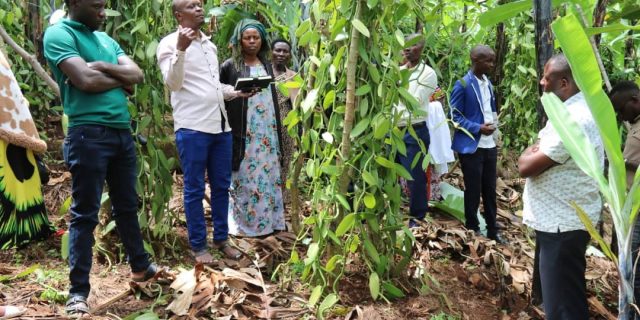
Farmers learning from farmers: Strengthening Uganda’s vanilla value chain through exchange visits.
Vanilla farmers from Rwenzori region are increasingly discovering that some of the most powerful lessons in agriculture come not from classrooms, but from fellow farmers. A recent farmer exchange visit to Ibanda District demonstrated how peer learning can inspire practical change, strengthen farmer organizations, and improve participation in high-value markets. The exchange visit, organized by the Kabarole Research and Resource Centre (KRC-Uganda) under the Vanilla Initiative for Building Resilience and Nurture Thriving Communities (VIBRANT) project funded by Enabel, brought together 60 lead farmers from Kasese, Bundibugyo, and Ntoroko districts. The farmers visited the Kyeikucu Turihamwe Cooperative in Ibanda- one of Uganda’s successful examples of organized vanilla production and marketing. The objective of the visit was simple but powerful: expose farmers to a functioning cooperative model while strengthening their knowledge on collective marketing, improved agronomic practices, and certification systems that enable farmers to access premium markets. Learning from a successful cooperative model At Kyeikucu Turihamwe Cooperative, farmers were introduced to a well-structured governance system that has helped build trust among members and buyers. With more than 650 members across Ibanda District, the cooperative operates through organized farmer groups led by local leaders who regularly meet and participate in decision-making processes. Transparent financial management, clear leadership roles, and proper documentation- including audited accounts and Annual General Meetings (AGMs)-have helped the cooperative grow into a reliable market partner. Through organized aggregation of vanilla, the cooperative has been able to supply large volumes of high-quality produce to buyers while securing competitive prices for farmers. Farmers also learned how strong institutions help solve common challenges in the vanilla sector, including premature harvesting, theft, and low market prices. By working collectively and promoting good farming practices, the cooperative has significantly improved both production and quality among its members. Certification and premium markets A major focus of the exchange was the role of certification in accessing premium markets. Farmers learned how compliance with standards such as Organic, Fairtrade, and Rainforest Alliance certification can increase market opportunities and attract higher prices. Certification requires consistent adherence to good agricultural practices, environmental conservation, fair labour conditions, and strong documentation systems. The cooperative demonstrated how farmers maintain records, follow traceability procedures, and implement environmentally responsible farming practices in order to meet certification requirements. These systems ensure that vanilla delivered by farmers can be traced from the garden to the final buyer, a critical requirement for global markets. Practical lessons from model farms Beyond cooperative management, the visit provided hands-on learning through visits to model vanilla farms. Farmers observed practical agronomic techniques such as proper pollination, soil fertility management using organic manure, mulching, natural pest control, and responsible harvesting. They also learned innovative approaches such as using natural inputs like ash and aloe vera for pest management, protecting farms from contamination, and maintaining clean storage environments since vanilla beans easily absorb surrounding odors. These practical demonstrations helped farmers visualize how improved practices can increase productivity while maintaining the quality standards required by premium markets. Building stronger farmer communities One of the strongest messages that emerged from the visit was the power of collective action. Organized farmer groups not only strengthen market bargaining power but also help farmers share knowledge, maintain quality standards, and mobilize resources for growth. Participants were encouraged to return to their communities and replicate the lessons learned by strengthening farmer groups, promoting improved agronomic practices, and encouraging collective marketing. A path toward a stronger vanilla sector As the VIBRANT project continues to support farmers in the Rwenzori region, initiatives such as exchange learning visits are expected to play a crucial role in transforming the vanilla value chain. By connecting farmers with successful models, strengthening cooperatives, promoting certification and quality production, these initiatives are laying the foundation for a more resilient and competitive vanilla sector in Uganda. Ultimately, the lessons from Ibanda highlight an important truth: when farmers learn from each other, the entire agricultural community grows stronger. The model farmer of Kyeikucu cooperative in Ibanda taking Vanilla farmers of Bundibugyo and Ntoroko through certification processes during exchange visit. Compiled by Oteba Eric
9. Apr 2026
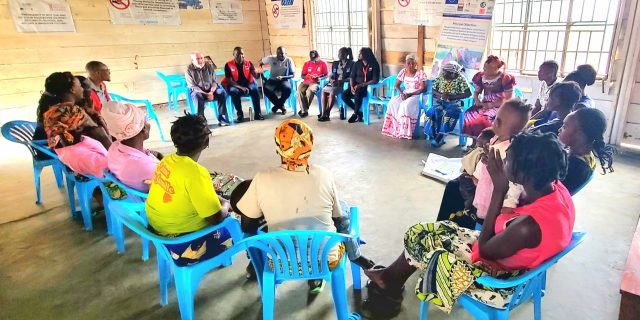
Donor Visit Showcases EASE Impact on Families: Voices of Change.
Compiled by Keneema Trashillah EASE officer Rhino camp. This month, we had the honor of hosting a global donor visit to our Early Adolescent Skills for Emotions (EASE) caregiver group. The visit created an opportunity for direct engagement between donors and caregivers, allowing participants to share firsthand experiences of how the program is transforming their families. Caregivers described challenges they faced before joining EASE, including frequent conflict, limited communication with their adolescents, and difficulty managing emotions within the home. Through the sessions, they gained practical skills in positive parenting, emotional regulation, active listening, and problem-solving. One caregiver shared: “Before EASE, my home was always full of shouting and misunderstanding. I did not know how to handle my child’s emotions. Through EASE, I learned to listen and guide instead of reacting in anger. Today, there is peace in our home.” Participants reported noticeable improvements, including stronger parent–adolescent relationships, reduced harsh discipline, and adolescents who are more open and better able to express their feelings. Caregivers also highlighted increased patience, reduced stress, and greater confidence in their parenting roles. When asked for recommendations, caregivers emphasized the importance of continuing and expanding the EASE program so that more families can benefit from its positive impact. The visit reaffirmed the value of investing in community-based mental health and parenting support initiatives. Together, we are strengthening families, nurturing resilience, and shaping brighter futures for adolescents. EASE caregivers sharing the impact of EASE intervention in their families and communities to the Donor during the Global Donor visit in Rhino Settlement
6. Mar 2026
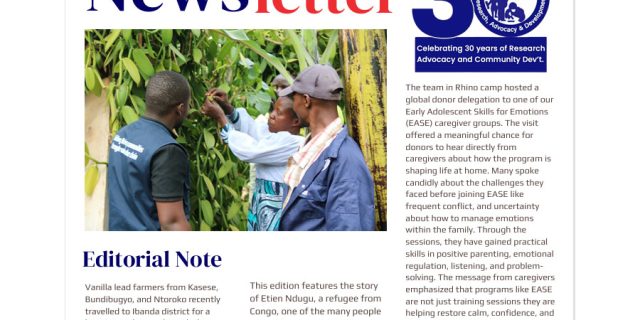
NEWSLETTER FEBRUARY 2026
Vanilla lead farmers from Kasese, Bundibugyo, and Ntoroko recently travelled to Ibanda district for a learning exchange through the VIBRANT project funded by Enabel. The host, the Kyeikucu Turihamwe Cooperative, offered a close look at what can happen when farmers organize and work with clear systems. The visit highlighted how collective action helps address common challenges such as premature harvesting, theft, and weak market bargaining power. Participants also explored how certification standards such as Organic, Fairtrade, and Rainforest Alliance open doors to premium markets, provided that farmers maintain good practices, proper records, and traceability from garden to buyer. This edition features the story of Etien Ndugu, a refugee from Congo, one of the many people whose lives are slowly changing through the Kulea Watoto project. After taking part in the project’s participatory sessions, Etien chose pig rearing as his livelihood activity and later received practical training in piggery management. The training quickly paid off when his pig gave birth to ten piglets. With the income from selling some piglets, he was able to buy food for his family, and scholastic materials for his children. For Etien, the experience is a clear reminder that with the right skills and a small opportunity, families can begin to rebuild their livelihoods and look to the future with renewed hope. The team in Rhino camp hosted a global donor delegation to one of our Early Adolescent Skills for Emotions (EASE) caregiver groups. The visit offered a meaningful chance for donors to hear directly from caregivers about how the program is shaping life at home. Many spoke candidly about the challenges they faced before joining EASE like frequent conflict, and uncertainty about how to manage emotions within the family. Through the sessions, they have gained practical skills in positive parenting, emotional regulation, listening, and problem-solving. The message from caregivers emphasized that programs like EASE are not just training sessions they are helping restore calm, confidence, and connection in the home. Vanilla thrives under the right conditions’ humidity, fertile soils, and protection from damage. Proper fencing and buffering are proving important as a measure to protect the crop from roaming livestock that can easily break the fragile vines, help deter theft, a real concern given vanilla’s high market value, especially during harvest season. These farming practices are more than farm boundaries they are a smart investment that protects farmers’ effort, improves productivity, and supports the long-term sustainability of vanilla farming. Click here to read
5. Mar 2026
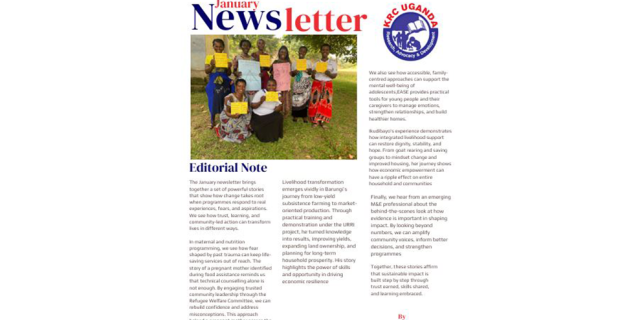
Newsletter January 2026
The January newsletter brings together a set of powerful stories that show how change takes root when programmes respond to real experiences, fears, and aspirations. We see how trust, learning, and community-led action can transform lives in different ways. In maternal and nutrition programming, we see how fear shaped by past trauma can keep life saving services out of reach. The story of a pregnant mother identified during food assistance reminds us that technical counselling alone is not enough, by engaging trusted community leadership through the Refugee Welfare Committee(RWC), we can rebuild confidence and address misconceptions. This approach helped a pregnant mother access the care she needed, a critical turning point in her pregnancy. Livelihood transformation emerges vividly in Barungi’s journey from low-yield subsistence farming to market oriented production. Through practical training and demonstration under the URRI project, he turned knowledge into results, improving yields, expanding land ownership, and planning for long-term household prosperity. His story highlights the power of skills and opportunity in driving economic resilience. Ikudibayo’s experience demonstrates how integrated livelihood support can restore dignity, stability, and hope. From goat rearing and saving groups to mindset change and improved housing, her journey shows how economic empowerment can have a ripple effect on entire household and communities. We also see how accessible, family centered approaches can support the mental well-being of adolescents, EASE provides practical tools for young people and their caregivers to manage emotions, strengthen relationships, and build healthier homes. Finally, we hear from an emerging M&E professional about the behind-the-scenes look at how evidence is important in shaping impact. By looking beyond numbers, we can amplify community voices, inform better decisions, and strengthen programmes. Together, these stories affirm that sustainable impact is built step by step through trust earned, skills shared, and learning embraced. Click here to read
5. Feb 2026